

How to fix them before they do
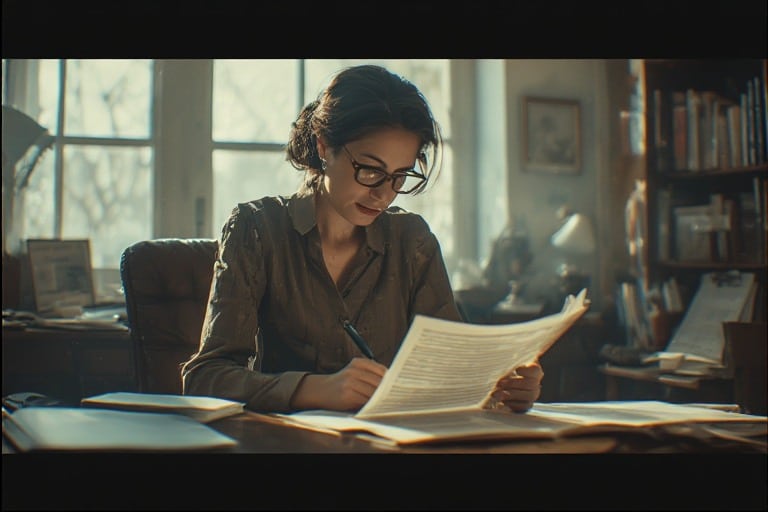
Every author makes mistakes. The ones who grow into great writers learn to catch those mistakes before your editor does.
A strong developmental editor can spot the cracks in a manuscript almost instantly. Weak character arcs, bogged-down pacing, scenes that tell instead of show — they find them all. But what if you could identify those problem areas yourself, before the manuscript ever lands on an editor’s desk?
Developmental editor Susan Barnes has worked with NYT and USA Today bestselling authors and honed her craft at Hachette Book Group. Here, she breaks down the most common writing mistakes she encounters in fiction manuscripts — and exactly what you can do to fix them.
Show, don’t tell — the rule every writer hears but not everyone masters
If you’ve ever worked with an editor, you’ve probably seen “show, don’t tell” somewhere in the margin. It’s one of the oldest rules in fiction. According to Susan, it shows up in manuscripts regardless of experience level — whether you’ve written fifty novels or fifty percent of your first one.
The core idea is simple. Instead of telling the reader how a character feels, you invite them into the experience. “Susan was angry” is telling. “Her cheeks flushed and her fists clenched” is showing. The difference between the two is the difference between a reader observing your story and a reader living inside it.
When to show and when it’s okay to tell
Here’s the nuance most writing advice glosses over: telling isn’t always wrong. Writing is about balance.
If a minor detail is simply a bridge to the next meaningful moment, telling is perfectly fine. It keeps the pacing moving. Where showing becomes essential is in the high-tension moments — a confrontation, an emotional revelation, a pivotal scene. Those are the moments where readers want to feel the electricity on the page, not just be informed of it.
Susan also points out that show vs. tell isn’t limited to emotions. It applies to setting and atmosphere too. A haunted house described as “clean” tells us almost nothing. But a narrator noticing their own footprints trailing across a spotless floor? That detail sends a chill down the spine.
Genre matters when applying the rule

The show vs. tell balance also shifts depending on genre. Literary fiction tends to linger on the texture of even small details — the writing itself is part of the experience. A fast-paced thriller or a romance novel has a different contract with the reader.
The best way to calibrate your instincts? Read widely and deeply in the genre you’re writing. The more you absorb the rhythm and feel of your target genre, the more naturally you’ll find the right balance in your own work.
Info dumping — the trap of knowing too much
The second most common mistake Susan sees is info dumping — unloading too much information on the reader at once. And the reason it happens makes complete sense.
As the author, you know everything about your world. You know what your characters had for breakfast, what their childhood looked like, and why they made the choices they made. The temptation to share all of that is completely natural. But readers don’t need all of it — at least not all at once.
The question Susan encourages authors to ask isn’t just “what does the reader need to know?” It’s “what does the reader need to know right now?” Those are two very different questions. The distinction between them is where compelling pacing lives.
A simple technique to spot info dumps in your manuscript
Susan’s practical trick: highlight every passage of backstory or exposition in your manuscript, then step back and look at the pattern. If your highlights appear in large, consecutive blocks, you’re giving too much at once.
The fix isn’t always to cut. Sometimes that information genuinely matters. It’s about distribution. Spreading revelations throughout the narrative creates suspense, rewards engaged readers, and keeps the story moving forward.
One thing Susan is emphatic about: don’t try to solve this while you’re still writing the first draft. Get to the end first. You can reorganize and refine in revision — but only if you’ve actually finished the story.
Exposition is not just backstory — and why that distinction matters
A lot of authors conflate exposition with backstory. Susan clarifies that exposition is really any narrative description — setting, action beats, the fabric of how a scene is woven together.
This matters because info dumping isn’t limited to backstory. You can over-describe a present-tense setting just as easily as you can over-explain a character’s history. Three consecutive paragraphs devoted to how immaculate a single room is? That’s an info dump — even if it’s happening in real time.
Readers today want to sink into a story and feel it. Anything that stalls that forward momentum risks losing them entirely.
Research-heavy writers are especially prone to this mistake

Writers who invest significant time in research — historical fiction authors, crime writers, military thriller writers — are especially vulnerable to info dumping. When you’ve spent weeks learning everything about a subject, it’s natural to want that effort to show on the page.
But readers don’t need every detail you uncovered. They only need the details that serve the story. A small, perfectly placed specific detail does far more work than three paragraphs of technical exposition. The best research-informed writing feels lived in, not lectured.
Point of view — choosing wisely and staying consistent
Point of view is another area where manuscripts frequently run into trouble. Accidentally slipping between POVs mid-scene is a common issue. So is choosing a POV that limits what the story needs to convey.
First-person POV creates an intimate, immersive reading experience — and it’s enormously popular right now, especially in romance. But it comes with structural constraints. If your world is complex and your plot requires the reader to know things your narrator can’t witness, you may need to reconsider your approach.
Dual first-person POV — alternating between two characters — is currently one of the most in-demand structures in commercial fiction. It can solve a lot of those access problems while keeping the intimacy readers love.
Know the rules well enough to break them on purpose
Here’s something Susan is refreshingly clear about: there isn’t much that’s truly “wrong” in fiction. The rules of writing exist to help you avoid accidentally tripping a reader out of the story.
Deliberate rule-breaking — when you know exactly why you’re doing it — is something else entirely. Some of the most distinctive voices in fiction throw out grammatical convention on purpose. A sentence fragment can carry more emotional weight than a complete sentence ever could.
The test isn’t whether you followed the rule. It’s whether you can explain your choice. If your answer to “why did you do this?” is confident and intentional, you’re probably doing it right.
Setting realistic writing goals — the mistake nobody talks about

Susan raises a writing mistake that doesn’t get nearly enough attention: setting goals that are too ambitious for your real life.
The spirit of a November writing challenge — the push to get a draft done in a month — is genuinely inspiring. But that kind of challenge can also backfire badly. When writers set a goal they can’t realistically meet and fall short, the result isn’t just missed word count. It’s the damaging internal narrative that follows: “I couldn’t do it, so maybe I’m not really a writer.”
Susan’s antidote is simple and powerful. Set a goal so small it almost feels embarrassing — 250 words, 500 words. Then sit down and write them. You’ll almost certainly write more. Momentum built from achievable wins is far more sustainable than the pressure of an impossible target.
A new home for the novel-writing challenge community
For years, National Novel Writing Month — NaNoWriMo — gave writers around the world a community and a deadline to write 50,000 words every November. The nonprofit behind it shut down in April 2025 after a series of financial struggles and community controversies, including a widely criticized stance on AI-generated writing.
The challenge itself, however, lives on. NaNo 2.0 (nano2.org), a community-driven initiative supported by a small group of longtime NaNoWriMo champions, has stepped in to keep the spirit alive. The site offers writing resources, pep talks, and the same milestone-tracking tools that helped hundreds of thousands of writers cross the finish line.
Whether you use NaNo 2.0 or one of the many other writing communities that have emerged — including active groups on Substack, Reddit, Bluesky, and local writing circles — the heart of the challenge remains the same. Set a goal. Sit down. Write. The community is still out there cheering you on.
Finishing the first draft is the most important thing you can do
Before any of the craft advice in this post can be applied, you need a completed draft to work with. Susan is emphatic: don’t try to edit as you write.
Don’t get lost fixing info dumps, restructuring your POV, or perfecting your opening chapter before you’ve reached the end. Get to “The End” first. That is an accomplishment worth celebrating no matter what the word count says.
All of the things that need fixing can only be fixed once you have a complete manuscript in front of you. Revision is where the real magic of storytelling happens — but only if you give yourself a story to revise.
When and how to work with a developmental editor
If you’re considering working with a developmental editor, Susan recommends waiting until you have a finished draft — especially if it’s your first book. Good editors book out quickly, so once you have a reliable sense of your timeline, reach out early.
Before sending anything off, let your manuscript rest for at least a few days, then reread it. You’ll be amazed at what you catch on your own with fresh eyes. And when you’re evaluating an editor, always ask for a sample edit. It should be free, and it will tell you everything about whether this is the right working relationship for you.
The author-editor dynamic is a close partnership. Finding the right fit matters as much as finding the right craft notes.
Start stronger before your manuscript reaches an editor

A great developmental editor will transform your manuscript. But the stronger the draft you hand them, the further they can take it.
That’s where AI-powered tools like Marlowe from Authors A.I. come in. Before you send your manuscript to a human editor, Marlowe can analyze your pacing, flag potential info dumps, identify overused words, and give you a visual map of your story’s beats — in minutes.
Think of it as your first editorial pass: objective, detailed, and available the moment you finish your draft. The best authors use every tool available to them. Make Marlowe one of yours.
→ Your Marlowe Pro report at Authors A.I. awaits. Get started for free.
Editor’s note: This post was created from a previous First Draft Friday Podcast, Episode 14. View the podcast interview in full here: https://youtube.com/live/Y4brq5aDtrU
About our guest: Susan Barnes
Susan Barnes is a Chicago-based freelance developmental editor with over a decade of experience helping fiction authors at every stage of their career — from debut writers finding their voice to NYT and USA Today bestselling authors.
After completing the NYU Publishing program, Susan moved to New York City and worked at Orbit and Redhook Books (Hachette Book Group), editing science fiction, fantasy, romance, thrillers, and general commercial fiction. The pull of her Midwest roots eventually brought her back to Chicago, where she launched her freelance editing practice.
Susan specializes in fantasy, science fiction, YA, romance, and mystery — but her door is open to any commercial fiction genre that excites her as a reader. She is the creator of Be Your Own Book Editor, an online course that walks fiction authors through the core developmental editing process in six weeks. She also offers one-on-one book coaching for authors who want a dedicated partner on their writing journey.
Known for her exacting but deeply supportive editorial style, Susan has earned a reputation for making good writers significantly better. As NYT and USA Today bestselling author Alessandra Torre puts it: “Susan is the best editor I’ve ever worked with. She can literally transform a novel with her feedback, tireless diligence, and insightful suggestions.”
Learn more about Susan and her services at susanbarnesediting.com.


