

Tips from a Wall Street Journal bestselling author
Ready to see how your own manuscript holds up? Try the free Marlowe Basic Report

Are you a plot writer or a character writer? Most authors lean one way or the other. Jeff Wheeler, Wall Street Journal bestselling fantasy author with over 35 books and 4 million copies sold, started out firmly on the plot side. His background as a history major gave him a love for complex storylines and unexpected twists. Characters, however, were a different challenge. It was his wife who gently pointed out that many of his early characters sounded a lot like him. Her favorite book is To Kill a Mockingbird, and she challenged Jeff to dig deeper. That nudge changed everything about how he writes.
Great characters can save a weak plot, but not the other way around
One of the most important lessons any writer can internalize is this: readers forgive a slow plot if they love the characters. They will not, however, stick around for a great plot populated by characters they don’t care about. Jeff has built his entire career around understanding this. He now spends significant time developing characters before he even starts writing. The story may come to him first, but the deeper question always follows: who should be at the center of it?
Tip 1: Watch real people closely
Jeff’s first tip is deceptively simple. Pay attention to the people around you. Writers are natural people-watchers. The most memorable characters often come from real life. Jeff has drawn inspiration from colleagues at Intel, neighbors, and members of his community. He looks for what he calls “idiosyncrasies” — those quirky, specific behaviors that reveal personality. One member of his congregation, a large man who works at a nuclear lab, eventually found himself in one of Jeff’s books. He even recognized himself by name.
Use real people as a starting point
Basing a character on a real person doesn’t mean copying them. It means borrowing specific mannerisms, reactions, or energy. Jeff tapped his 16-year-old niece when writing his first strong female protagonist in the Wretched of Muirwood series. He sent her chapters as he wrote them. She gave him honest feedback on how a teenage girl would actually think, feel, and react. That coaching made a meaningful difference in the authenticity of the character.
Tip 2: Use alpha and beta readers strategically
Jeff relies on early readers throughout his process. His youngest sister receives new chapters every week, as rough drafts. She doesn’t know where the story is going, which makes her questions especially valuable. When she’s confused, Jeff knows he needs to clarify. When she’s surprised, he knows a twist is landing well. His wife reads the complete manuscript after it’s finished and offers big-picture feedback. She once pointed out that he was describing food in more detail than a romantic moment between two characters. Honest, specific feedback from trusted readers is irreplaceable.

Tip 3: Mine history for characters
Jeff’s history degree continues to pay dividends. He reads biographies and historical accounts not just for plot ideas, but for characters. The people surrounding famous historical figures are often more interesting than the figures themselves. While researching his second Muirwood series, he read several biographies of Mary Tudor — Henry VIII’s daughter, often called Bloody Mary. The way she spoke, her refusal to abandon her faith despite enormous pressure, and the way people around her responded all fed directly into his character work. History is unpredictable in ways no author could invent.
Biographies of modern figures work just as well
This tip isn’t limited to medieval kings and queens. Jeff has read Walter Isaacson’s biography of Steve Jobs and started digging into material on Mark Zuckerberg after watching The Social Network. Modern biographies reveal the same thing ancient ones do — how a person thinks under pressure, what they value, and how they treat people around them. Those qualities translate across any genre or time period.

Tip 4: Use images to visualize your character
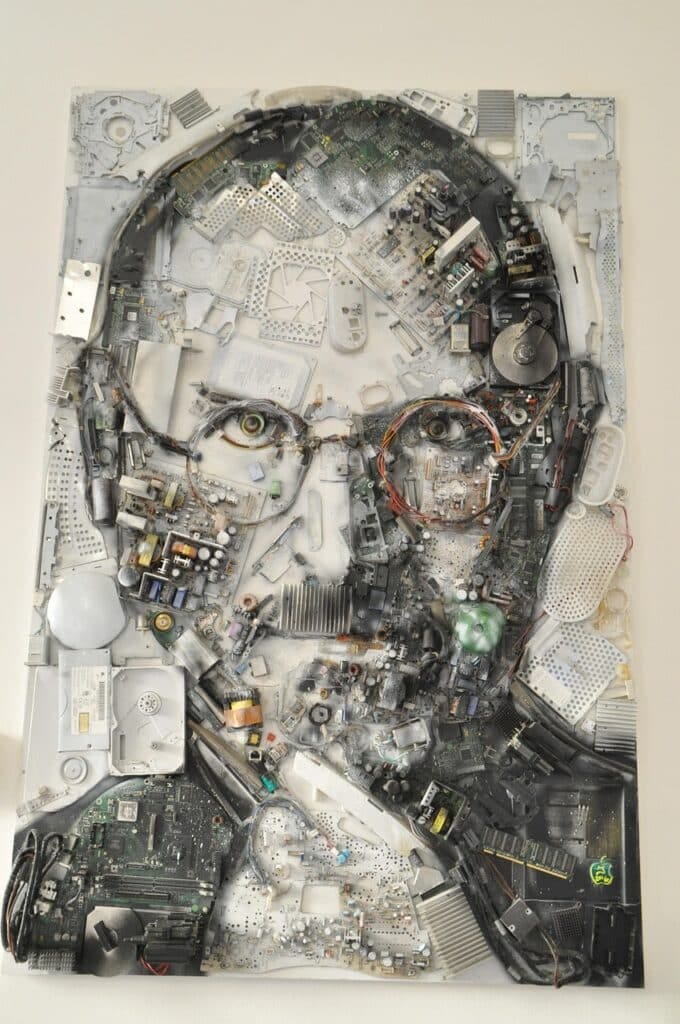
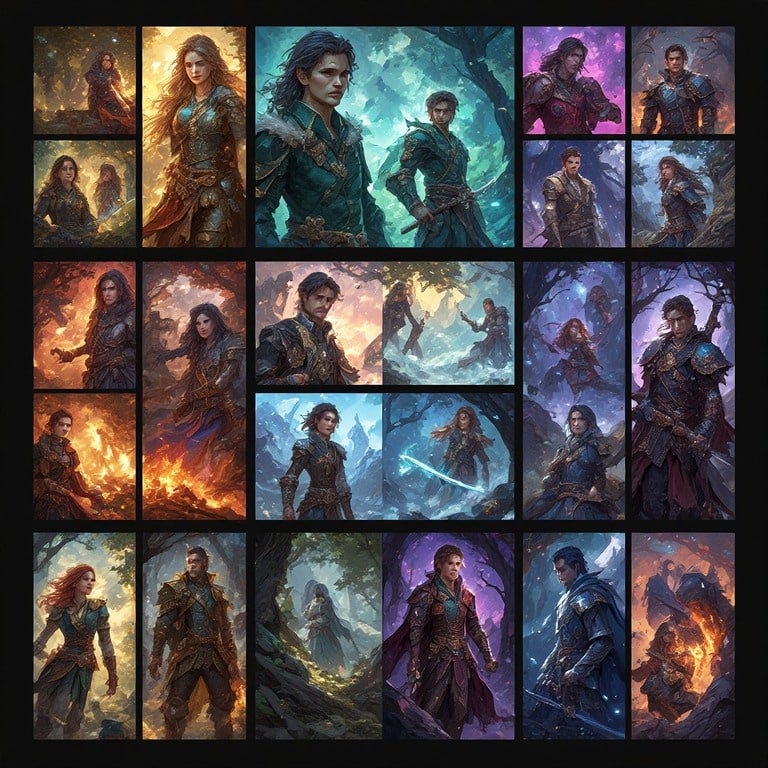
Before Jeff writes, he builds a visual reference for his characters. He browses stock photo sites like Depositphotos and iStock, searching by age, gender, and expression until something clicks. The right image captures a personality in a glance. He saves those photos to a folder on his laptop. Before sitting down to write a chapter, he reviews them. The images help him re-enter a character’s mindset quickly. For his first Muirwood protagonist, he found a model whose curly blonde hair and expression reminded him of his niece. That became his anchor.
Build a character vision board
You don’t need to stop at faces. Jeff also searches for period-specific clothing, settings, and props. A search for “medieval leather jerkin” led him to a catalog model with a brooding expression — and that became his male lead, Colvin. Pinterest boards or simple desktop folders work equally well. The goal is to have something to look at when you lose the thread of a character. Visual anchors bring them back fast.
Tip 5: Let sound support your writing process
Music plays a role in Jeff’s process, though not while he’s actually writing. He once heard a song at a frozen yogurt shop that perfectly captured the love story he was trying to tell in his First Argentine series. He used Siri to identify it on the spot, then listened to it repeatedly while drafting romantic scenes between Claire and Ransom. Music can define a mood, a relationship, or even an entire era. If you’re writing a period piece, immersing yourself in the music of that time reconnects you to how life felt then.
Create the right writing environment
Jeff writes with a white noise machine running and noise-canceling headphones on. It’s an unusual combination, but it works. The white noise masks outdoor sounds. The headphones signal to his brain that it’s time to focus. He writes three chapters per week, roughly two hours per chapter, finishing a book approximately every three months. That consistency is what makes four books a year possible. As The War of Art by Steven Pressfield explains, the best writers don’t wait for inspiration. They show up at a set time and let the work follow.
Tip 6: Reinvent characters from literature and history
Jeff’s final tip is perhaps his boldest. He borrows characters from Shakespeare, Dickens, Jane Austen, and historical figures, and repurposes them for his own worlds. A Welsh soldier from Henry V inspired a beloved side character in his Muirwood series. He even kept a signature phrase from the play. For his Victorian-inspired Harbinger series, he transplanted characters from three different classic authors and one historical figure. This isn’t copying. It’s the creative mashup process at work. As Picasso reportedly said, and Steve Jobs loved to quote “great artists steal.”
The creative mashup approach
Think of Jack Sparrow. The screenwriter for the first Pirates of the Caribbean film built that character through a deliberate mashup of different personalities and references. Johnny Depp added another layer of inspiration on top of that. The result became one of the most memorable characters in modern film. This is exactly how creativity works. You gather pieces from different sources — a historical figure’s stubbornness, a neighbor’s odd habit, a model’s expression, a song’s mood, and combine them into something new.
This blog post was developed from a previous First Draft Friday conversation between bestselling authors Alessandra Torre and Jeff Wheeler. You can watch the full interview on YouTube.
About Jeff Wheeler
Jeff Wheeler is a Wall Street Journal bestselling fantasy author with over 35 books and more than 4 million copies sold. He took early retirement from Intel in 2014 to write full time. His series have appeared on the WSJ Bestseller list five times and have been published in multiple languages including Italian, Chinese, Spanish, Russian, and German. He is also the founder of Deep Magic, an e-zine of clean fantasy and science fiction. Jeff lives in the Rocky Mountains with his wife and five children and is a devout member of The Church of Jesus Christ of Latter-day Saints. Learn more at jeff-wheeler.com.
Is your manuscript ready for readers?
Marlowe analyzes your fiction for pacing, dialogue, character development, and more — in minutes. Your story stays entirely yours. Marlowe reads, never rewrites. Try the free Marlowe Basic Report
Images are stock photos or a.i. generated.


