

Ready to see how your own manuscript holds up? Try the free Marlowe Basic Report
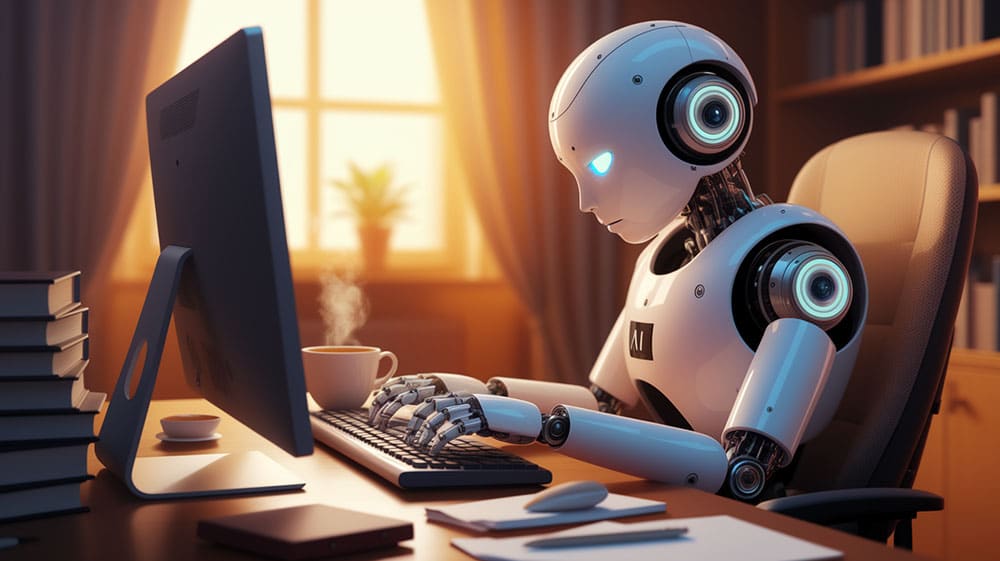
You’ve probably seen them on Facebook, X, BlueSky or your favorite social network.
The screeds begin with something like this: I will never read a book where the author used AI in any form or fashion!!! …
I don’t often wade into these debates. If I did, I’d point out that many—perhaps most—authors already use AI in some part of their creative process. Research? Almost certainly. Checking the manuscript for errors? Absolutely. Outlining chapters? Maybe. Brainstorming scene ideas? Sometimes.
But writing entire chapters of a novel? Or writing in the style of a favorite bestselling author? Those are different matters altogether.
At Authors A.I., we believe in a measured, nuanced, and transparent approach to AI—especially when it comes to ethical boundaries.
From the beginning, we’ve taken a firm stance on protecting authors’ livelihoods against piracy and plagiarism. While some folks might want to train an AI to write in the style of John Grisham or Danielle Steel, we’ll never allow that on our platform. That’s not what we do. Instead, we help authors write better books through AI-driven critiques and feedback.
Authors and the creative process
Yes, AI can generate large portions of a novel. And for sure, to write a book with AI it’s not as simple as pressing a button. But something vital is lost in the creative process when a book is assembled from prompts rather than written from the heart. (Are you really an author if you simply copy and paste an AI’s output instead of writing your own book?) While we don’t pass judgment on those who choose to use AI for writing, we believe it’s wrong to hide that fact from readers.
Authors A.I. launched in 2019—three years before ChatGPT reshaped the landscape. Now, with the rise of large language models, new ethical questions are emerging for authors, readers, and publishers alike.
That’s why we decided to make our stance clear in an Ethics Statement of Principles that our Board of Directors has just adopted. Check it out: https://authors.ai/ethics-statement/.
The U.S. Copyright Office weighs in
When we compare manuscripts uploaded to our service against those from bestselling authors, we do so through licenses, purchases, or partnerships that comply with copyright law. Likewise, we don’t use our customers’ works to train our AI model.
Still, there’s much education to be done. For example, the U.S. Copyright Office recently ruled that AI-generated books and portions of books do not qualify for copyright protection. So the AI writing crowd now needs to deal with the reality that others just might copy their works fair and square.
While ethical discussions like these are primarily for the authors we work with, readers have a stake in this, too. Maybe I’m biased—as a published author, I have a vested interest in the outcome. But I don’t think we want to live in a world where most books are mass-produced by machines.
AI should enhance creative works and assist authors—not replace them.
Agree? Disagree? It’s a conversation worth having.
Is your manuscript ready for readers?
Marlowe analyzes your fiction for pacing, dialogue, character development, and more — in minutes. Your story stays yours entirely. Marlowe reads, never rewrites. Try the free Marlowe Basic Report
Images in this post are stock images or AI-generated.


